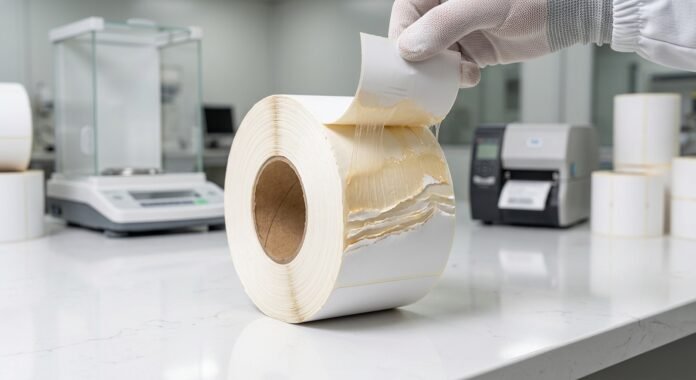

Adhesive ooze occurs when pressure, heat, material design, conversion, or storage allows adhesive to move beyond the label edge. It can make roll layers stick, collect dust, contaminate guides, and cause feeding problems. The affected lot should be isolated until the source is identified.
For printer operators and buyers investigating sticky roll edges or residue, the decision depends first on how heat changes adhesive and how winding pressure contributes. The approved item record should preserve the conditions and test results that support the choice.
When reviewing why does adhesive ooze from thermal label rolls, buyers can compare relevant thermal label adhesive before requesting samples. Product listings help narrow the options, but approval should use the actual printer, surface, and operating environment described in this article.
How Heat Changes Adhesive
Pressure-sensitive adhesives become softer as temperature rises. Inside a wound roll, sustained heat and layer pressure can encourage material to move toward cut edges.
Review storage and transport temperatures, including vehicles and loading areas. Compare unopened cartons kept in different locations before concluding that the printer caused the residue.
The purchase specification should state the accepted condition for how heat changes adhesive so a repeat order can be checked against the same requirement.
How Winding Pressure Contributes
A roll wound too tightly or stored under excessive stacking pressure compresses the construction. Uneven winding can concentrate force on one edge.
Inspect the roll profile for telescoping, crushed cores, or glossy adhesive lines. Record whether inner layers are more affected than outer layers.
If results differ, change one factor at a time. This separates the effect of how winding pressure contributes from printer maintenance, artwork, or handling changes.
How Die Cutting Affects Edges
A dull or poorly set die can drag adhesive, leave hanging edges, or cut inconsistently. Matrix removal may also pull adhesive toward the finished label edge.
Peel labels slowly and inspect the cut under good light. Look for repeating defects at the same position across the web or repeat length.
Keep a retained sample that demonstrates acceptable how die cutting affects edges. Written descriptions alone may not capture the physical behavior that matters in this application.
How Ooze Affects Printing
Exposed adhesive attracts paper dust and can transfer to guides, sensors, rollers, and the printhead area. Contamination may cause skew, jams, dark marks, or labels peeling inside the printer.
Stop using media that deposits residue. Follow the printer manufacturer’s cleaning instructions and avoid sharp tools or unapproved solvents.
For printer operators and buyers investigating sticky roll edges or residue, the relevant result is whether how ooze affects printing remains consistent during normal work, not whether one carefully prepared sample looks acceptable.
How to Document the Problem
A useful complaint identifies the lot, carton, roll position, storage history, printer, settings, and failure rate. Cleaned equipment can remove evidence if no photographs are taken first.
Photograph both roll edges, residue locations, liner, and affected printer parts. Retain a sealed roll and the carton label for supplier evaluation.
Record the media lot, printer, surface, environment, and observation when checking how to document the problem. These details make later comparisons useful.
How to Prevent Repeat Failures
Prevention may require changes to adhesive formulation, coat weight, die maintenance, winding tension, edge trim, packaging, or storage. The correct action depends on the evidence.
Agree on measurable edge and unwind criteria with the supplier. Check the next lot before it enters full production and monitor storage temperature.
A production trial should include normal variation in how to prevent repeat failures, including different operators or package lots when those factors change the process.
Buyer Checklist
- How Heat Changes Adhesive Review storage and transport temperatures, including vehicles and loading areas.
- How Winding Pressure Contributes Inspect the roll profile for telescoping, crushed cores, or glossy adhesive lines.
- How Die Cutting Affects Edges Peel labels slowly and inspect the cut under good light.
- How Ooze Affects Printing Stop using media that deposits residue.
- How to Document the Problem Photograph both roll edges, residue locations, liner, and affected printer parts.
A supplier discussion should use the completed specification rather than the article title alone. Buyers evaluating why does adhesive ooze from thermal label rolls can ask BETCKEY labels to confirm the available construction and sample details. Any performance claim should be checked against the intended printer, substrate, temperature, handling, and service period.
Common Buyer Questions
What is the main check for how heat changes adhesive? Pressure-sensitive adhesives become softer as temperature rises. Inside a wound roll, sustained heat and layer pressure can encourage material to move toward cut edges. Review storage and transport temperatures, including vehicles and loading areas. Compare unopened cartons kept in different locations before concluding that the printer caused the residue.
What is the main check for how winding pressure contributes? A roll wound too tightly or stored under excessive stacking pressure compresses the construction. Uneven winding can concentrate force on one edge. Inspect the roll profile for telescoping, crushed cores, or glossy adhesive lines. Record whether inner layers are more affected than outer layers.
What is the main check for how die cutting affects edges? A dull or poorly set die can drag adhesive, leave hanging edges, or cut inconsistently. Matrix removal may also pull adhesive toward the finished label edge. Peel labels slowly and inspect the cut under good light. Look for repeating defects at the same position across the web or repeat length.
Final Buying Decision
Base the final choice on measured results for how heat changes adhesive, how winding pressure contributes, and how to prevent repeat failures. Approve the complete label construction with a written test method and retained sample. Operators then have a stable setup, and purchasing can compare quality, price, and supply against the same requirement.
Production Approval
Run the proposed item through a representative production period before full deployment. For printer operators and buyers investigating sticky roll edges or residue, the trial should include the busiest normal condition, the most difficult surface or package, and the printer with the least performance margin. Count feeding errors, reprints, application failures, unreadable text, and rescans. Review the evidence with operations and purchasing, update the item specification, and retain the final sample with its lot number.
Repeat the final check after the proposed label has been stored and handled normally. Confirm that how to prevent repeat failures still meets the written acceptance condition and that operators do not need an undocumented workaround. Record the approval date, responsible reviewer, printer settings, and sample lot before purchasing releases a larger order.