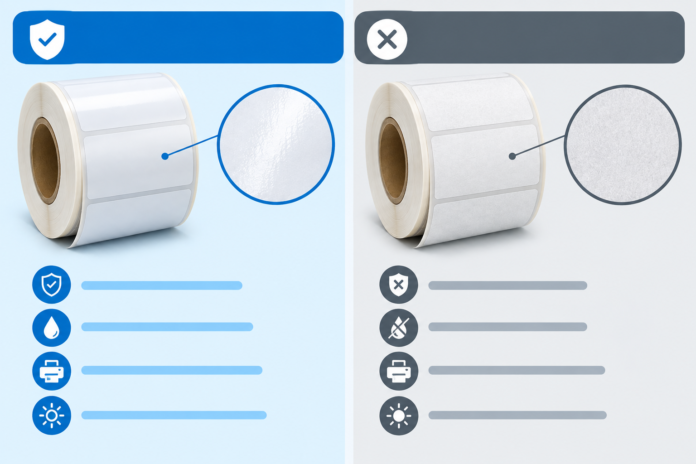

Top-coated direct thermal labels add a protective layer above the heat-sensitive coating, while uncoated labels leave that imaging layer more exposed. Top coating can improve resistance to moisture, oils, plasticizers, abrasion, and environmental contact, but actual performance depends on the complete construction and stated test conditions.
For label buyers comparing image durability and cost, the decision depends first on how direct thermal coatings work and what a top coat changes. The approved item record should preserve the conditions and test results that support the choice.
When reviewing what is the difference between top coated and uncoated direct thermal labels, buyers can compare relevant direct thermal labels before requesting samples. Product listings help narrow the options, but approval should use the actual printer, surface, and operating environment described in this article.
How Direct Thermal Coatings Work
A direct thermal image forms when controlled heat from the printhead activates chemicals in the label surface. The printable coating therefore remains part of the finished image rather than being covered by ink or supplied by a ribbon.
Buyers should confirm that the media is direct thermal and record the printer darkness and speed used for approval. A thumbnail scratch test can identify the thermal side, but it cannot determine durability or coating grade.
Record the media lot, printer, surface, environment, and observation when checking how direct thermal coatings work. These details make later comparisons useful.
What a Top Coat Changes
A top coat is a protective layer placed over the thermal imaging chemistry. Depending on its formulation, it may reduce damage from rubbing, water, oils, cleaners, or contact with flexible plastics, but no top coat protects against every exposure.
Request the resistance data that matches the application. Test printed labels after the expected contact time instead of relying on the words protected or premium.
A production trial should include normal variation in what a top coat changes, including different operators or package lots when those factors change the process.
When Uncoated Media Is Suitable
Uncoated direct thermal media can work well for short-life indoor tasks with limited moisture, friction, heat, or chemical contact. Common examples include controlled shipping, receipts, temporary picking, and short-term identification.
Define how long text and barcodes must remain readable. If the label completes its job before meaningful exposure occurs, paying for protection that the process does not use may add cost without reducing risk.
The purchase specification should state the accepted condition for when uncoated media is suitable so a repeat order can be checked against the same requirement.
How Coating Affects Printing
Coating smoothness and sensitivity influence the energy needed to form a dark, sharp image. A new construction may need different darkness or speed settings even when its dimensions match the previous roll.
Print a graded test at several settings and inspect fine text, horizontal lines, and barcodes. Choose the lowest stable energy that gives reliable scans across the label width.
If results differ, change one factor at a time. This separates the effect of how coating affects printing from printer maintenance, artwork, or handling changes.
How to Compare Durability
A fair comparison uses the same printer, artwork, substrate, application pressure, and exposure. Looking at two unused white labels provides no evidence about image protection.
Print samples from both constructions, expose them to the actual moisture, oil, abrasion, heat, or plastic contact, and scan them at planned intervals. Record background darkening as well as loss of image density.
Keep a retained sample that demonstrates acceptable how to compare durability. Written descriptions alone may not capture the physical behavior that matters in this application.
What to Put in the Specification
The purchase description should identify direct thermal media, top-coated or uncoated construction, facestock, adhesive, liner, dimensions, roll format, and required readable life. A generic description such as white thermal label leaves critical choices undefined.
Keep the approved sample and lot information with the item specification. Require notice before a change to the thermal paper or protective coating because the same size can behave differently after such a change.
For label buyers comparing image durability and cost, the relevant result is whether what to put in the specification remains consistent during normal work, not whether one carefully prepared sample looks acceptable.
Buyer Checklist
- How Direct Thermal Coatings Work Buyers should confirm that the media is direct thermal and record the printer darkness and speed used for approval.
- What a Top Coat Changes Request the resistance data that matches the application.
- When Uncoated Media Is Suitable Define how long text and barcodes must remain readable.
- How Coating Affects Printing Print a graded test at several settings and inspect fine text, horizontal lines, and barcodes.
- How to Compare Durability Print samples from both constructions, expose them to the actual moisture, oil, abrasion, heat, or plastic contact, and scan them at planned intervals.
A supplier discussion should use the completed specification rather than the article title alone. Buyers evaluating what is the difference between top coated and uncoated direct thermal labels can ask BETCKEY labels to confirm the available construction and sample details. Any performance claim should be checked against the intended printer, substrate, temperature, handling, and service period.
Common Buyer Questions
What is the main check for how direct thermal coatings work? A direct thermal image forms when controlled heat from the printhead activates chemicals in the label surface. The printable coating therefore remains part of the finished image rather than being covered by ink or supplied by a ribbon. Buyers should confirm that the media is direct thermal and record the printer darkness and speed used for approval. A thumbnail scratch test can identify the thermal side, but it cannot determine durability or coating grade.
What is the main check for what a top coat changes? A top coat is a protective layer placed over the thermal imaging chemistry. Depending on its formulation, it may reduce damage from rubbing, water, oils, cleaners, or contact with flexible plastics, but no top coat protects against every exposure. Request the resistance data that matches the application. Test printed labels after the expected contact time instead of relying on the words protected or premium.
What is the main check for when uncoated media is suitable? Uncoated direct thermal media can work well for short-life indoor tasks with limited moisture, friction, heat, or chemical contact. Common examples include controlled shipping, receipts, temporary picking, and short-term identification. Define how long text and barcodes must remain readable. If the label completes its job before meaningful exposure occurs, paying for protection that the process does not use may add cost without reducing risk.
Final Buying Decision
Base the final choice on measured results for how direct thermal coatings work, what a top coat changes, and what to put in the specification. Approve the complete label construction with a written test method and retained sample. Operators then have a stable setup, and purchasing can compare quality, price, and supply against the same requirement.