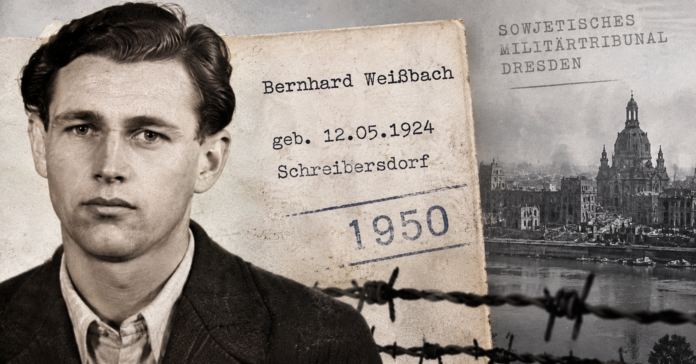

Bernhard Weißbach is a name that can lead to conflicting information online. Similar surnames and references to people from different historical periods have caused separate identities to become mixed together.
Archival material provides a clearer starting point. A twentieth-century man with this exact name appears in records concerning Soviet military tribunals in Dresden. These documents establish several important events while leaving much of his personal background unknown.
Who Was Bernhard Weißbach?
The documented individual was born on May 12, 1924, in Schreibersdorf, identified in the historical record as present-day Pisarzowice.
His name appears in the person database maintained by the Dresden Documentation Center for individuals convicted by Soviet military tribunals. The surviving material focuses mainly on a specific period of his adult life rather than providing a conventional biography covering childhood, education, career, and family.
Establishing the Correct Identity
The name is not unique, which makes careful identification important. Records from different periods may concern unrelated individuals who happen to share it.
Spelling creates another challenge. Weißbach can appear as Weissbach when the German letter ß is represented by “ss.” The similar-looking surname Weisbach also occurs in historical material.
Dates, locations, occupations, and relatives are therefore more useful for establishing identity than spelling alone.
The 1950 Soviet Military Tribunal
The strongest documented chapter of his history concerns a Soviet military tribunal proceeding in 1950.
According to the Dresden archival database, Weißbach was convicted on February 18, 1950. The case was handled by a Soviet military tribunal associated with the 1st Guards Tank/Mechanized Army, with proceedings taking place at Münchner Platz in Dresden.
The record cites Articles 58-6 and 58-11 of the RSFSR Criminal Code.
His 25-Year Sentence
The tribunal imposed a 25-year sentence. The database identifies Dresden (Münchner Platz) and Bautzen I among his places of imprisonment.
These details provide a documented picture of this period without requiring assumptions about an unverified profession or public career.
Rehabilitation Decades Later
His historical record continued long after the original conviction.
The same archival entry lists a rehabilitation decision dated November 17, 1994, issued by the Chief Military Prosecutor’s Office of the Russian Federation.
This later decision provides another firmly dated event connected to the case and extends the documented timeline by more than four decades.
What Is Known About His Personal Life?
The available material reveals far more about his legal history than his private life.
Although his birth details are recorded, the same source does not establish his parents, childhood, education, marriage, children, or wider family background. His complete employment history is also unclear.
Assigning him a particular employer, profession, financial status, or personal achievements would therefore require separate supporting evidence. Leaving these areas unresolved is more accurate than filling them with information belonging to another person with a similar name.
The Johann Bernhard von Weisbach Confusion
One important identity issue involves Johann Bernhard von Weisbach. Despite the resemblance between their names, the documented timelines place them in entirely different historical periods.
The individual discussed in this article was born in 1924 and appears in records concerning events in 1950. Johann Bernhard von Weisbach, by contrast, appears in historical material concerning eighteenth-century European military and diplomatic affairs.
Why the Names Can Be Misleading
The surnames Weißbach, Weissbach, and Weisbach can look closely related. However, Johann Bernhard von Weisbach’s recorded name also includes Johann and the nobiliary particle von.
Changing the surname and removing those elements would require supporting historical documentation before both identities could reasonably be connected.
Why Their Histories Should Remain Separate
The difference in chronology provides the clearest reason not to merge their biographies.
One belongs to the twentieth-century record, while the other appears in eighteenth-century history. Military positions, diplomatic activities, family information, or achievements belonging to Johann Bernhard von Weisbach should therefore not be attributed to the man documented in Dresden.
What Remains Unknown?
The archival evidence establishes several major events but does not provide a complete life story.
A detailed education history, full professional career, marriage, children, and everyday life are not sufficiently documented in the material used here. Information about his life after imprisonment is also limited.
These gaps are worth preserving rather than filling with assumptions. Historical accuracy depends as much on recognizing the limits of available evidence as it does on reporting known facts.
Was He a Public Figure?
The surviving information does not establish him as a conventional public figure known for entertainment, politics, business, or another prominent career.
His significance in the available material comes instead from records concerning Soviet military tribunal proceedings and his later rehabilitation.
This also helps explain why a detailed personal biography is difficult to construct. Historical archives can preserve someone’s involvement in a particular event without documenting every aspect of that person’s life.
Documented Timeline
The available record provides four particularly useful points in his history:
- 1924: Born in Schreibersdorf.
- 1950: Convicted by a Soviet military tribunal and sentenced to 25 years.
- Imprisonment: Records identify Dresden and Bautzen I.
- 1994: A rehabilitation decision was issued in connection with the case.
Together, these events provide a factual foundation for understanding the documented individual without attaching unsupported personal details to him.
Conclusion
The surviving record offers a limited but meaningful account of Bernhard Weißbach. It establishes his birth, Soviet military tribunal case, imprisonment, and later rehabilitation.
Other areas of his life remain unclear, particularly his family and professional background. His biography should also remain separate from Johann Bernhard von Weisbach, whose similar name belongs to a different historical period.
FAQs
Who was Bernhard Weißbach?
He was a German man born in 1924 whose name appears in historical records concerning Soviet military tribunal proceedings in Dresden.
When was he born?
He was born on May 12, 1924, in Schreibersdorf, identified in the record as present-day Pisarzowice.
What happened to him in 1950?
A Soviet military tribunal convicted him in Dresden on February 18, 1950, and imposed a 25-year sentence.
Where was he imprisoned?
The historical record lists Dresden (Münchner Platz) and Bautzen I among his places of imprisonment.
Was he later rehabilitated?
Yes. The archival entry lists a rehabilitation decision dated November 17, 1994, issued by the Chief Military Prosecutor’s Office of the Russian Federation.
Was he the same person as Johann Bernhard von Weisbach?
No reliable evidence establishes them as the same person, and their documented histories belong to very different periods.
What is known about his family?
The archival material used for this biography does not establish reliable details about his parents, spouse, children, or wider family life.